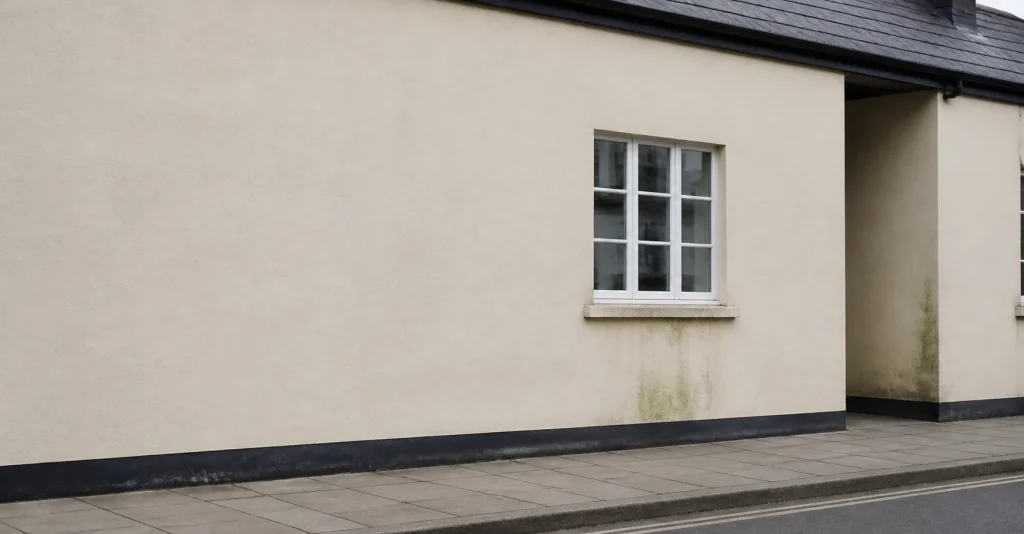
Rendered walls can look clean for a short while after an ordinary exterior wash, then slowly begin to show the same marks again. For many property owners, that repeat staining is frustrating because it feels as though the surface has already been dealt with.
The reason is usually simple. Render often needs more than surface level rinsing. Stains on render are commonly linked to organic growth, trapped moisture, weather exposure and the texture of the finish itself, which is why specialist render cleaning is often the more suitable approach.
Ordinary washing often only removes what you can see
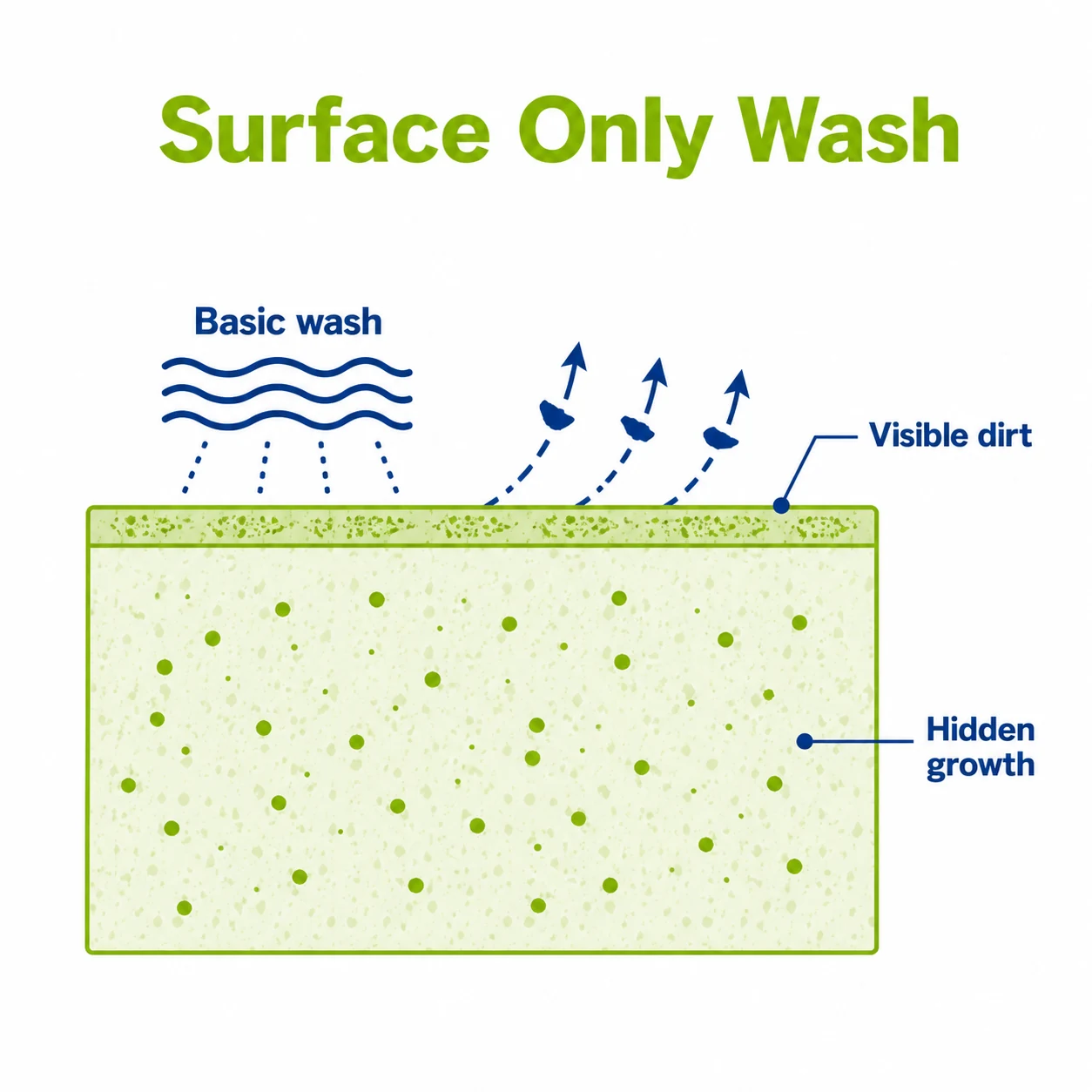
A general exterior wash can make a rendered wall look brighter because it removes loose dirt, dust and some surface marks. That improvement is real, but it may not deal with the cause of the staining.
Many marks on render are not just sitting on top of the surface. Algae, lichen and other organic growth can take hold within tiny pores and textured areas. If the visible layer is rinsed away but the underlying growth remains active, the wall can begin to discolour again once conditions suit it.
This is why a wall can look clean after washing, then gradually return to its previous condition. The wash has improved appearance, but it has not fully treated what is causing the marks. Specialist render cleaning services are designed around the material and the type of staining, rather than treating the wall like any other hard exterior surface.
Render holds moisture, texture and contamination differently
Render is not the same as brick, stone, concrete or paving. It can have a fine, open texture that catches airborne dirt and allows moisture to linger, particularly in shaded or sheltered areas. This makes it a good surface for staining to return if cleaning is too basic.
Rainwater, condensation, plant debris, pollution and residue from nearby surfaces can all contribute to marks. Once the wall becomes damp, organic growth has a better chance of settling back in. A powerful rinse may remove loose contamination, but it does not change the conditions that allowed the staining to develop.
The texture of render also matters. Smooth areas may clean more easily, while rougher finishes can hold particles in tiny recesses. When those particles remain, they can act as a base for fresh discolouration. This is one reason why rendering cleaning is best approached with care, using methods chosen for the wall rather than general pressure alone.
Pressure alone can be the wrong answer
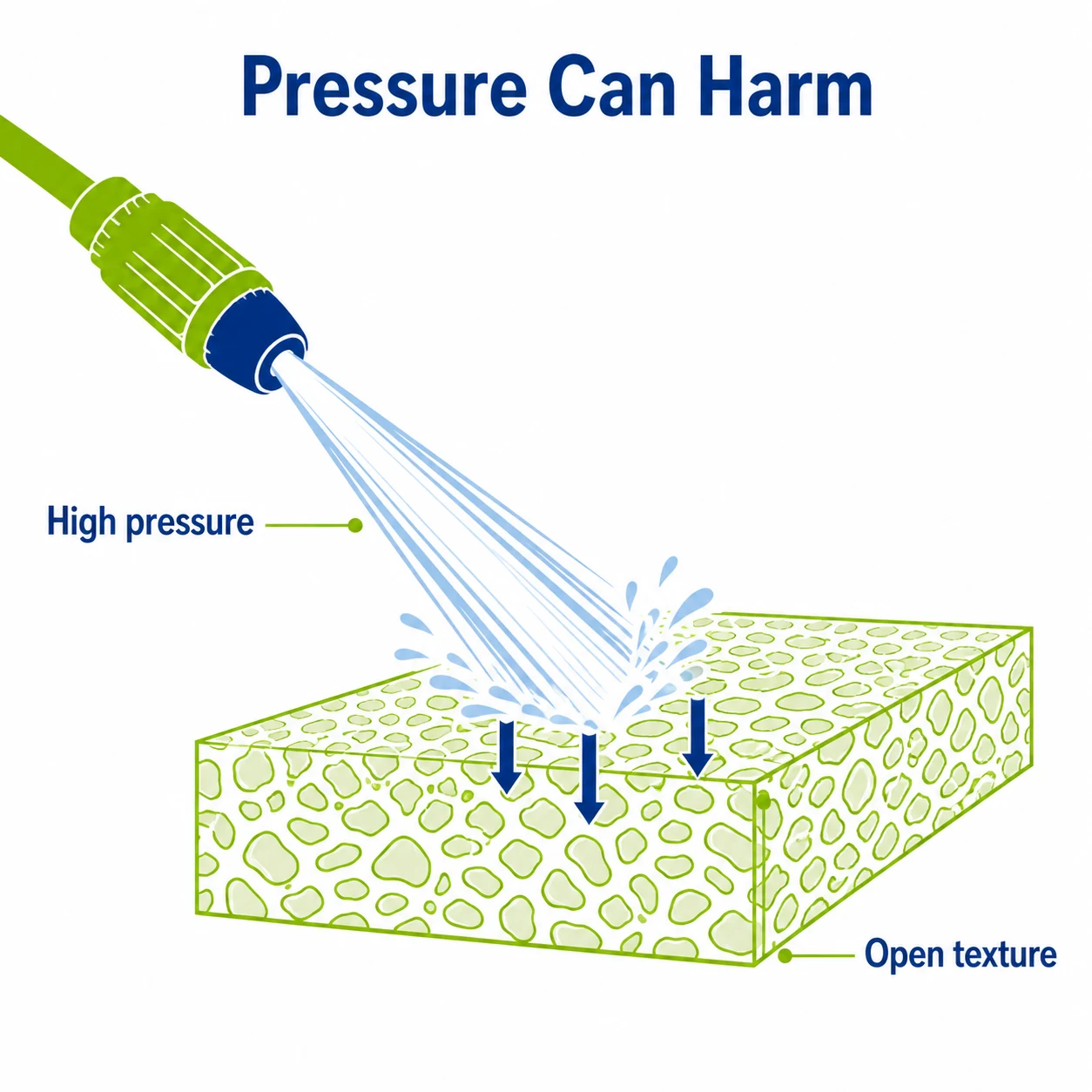
When stains keep returning, it is tempting to think the wall simply needs a stronger wash. With render, that is not always wise. The aim is not to blast the surface as hard as possible. The aim is to clean the render effectively while respecting the finish.
Some rendered surfaces can be marked, etched or weakened by unsuitable pressure. Even where damage is not obvious, aggressive washing may drive water into areas where it is not wanted. It can also leave behind the biological cause of the staining, especially if the treatment does not reach into the texture of the render.
A specialist render cleaning company will usually consider the surface condition, the type of staining, drainage, nearby materials and the safest cleaning method before starting. In many cases, soft washing is a better fit because it targets organic staining as well as visible dirt. Leicester Proclean has also written about exterior wall softwash methods, which can help explain why a gentler process can still be very effective.
The source of the stain matters
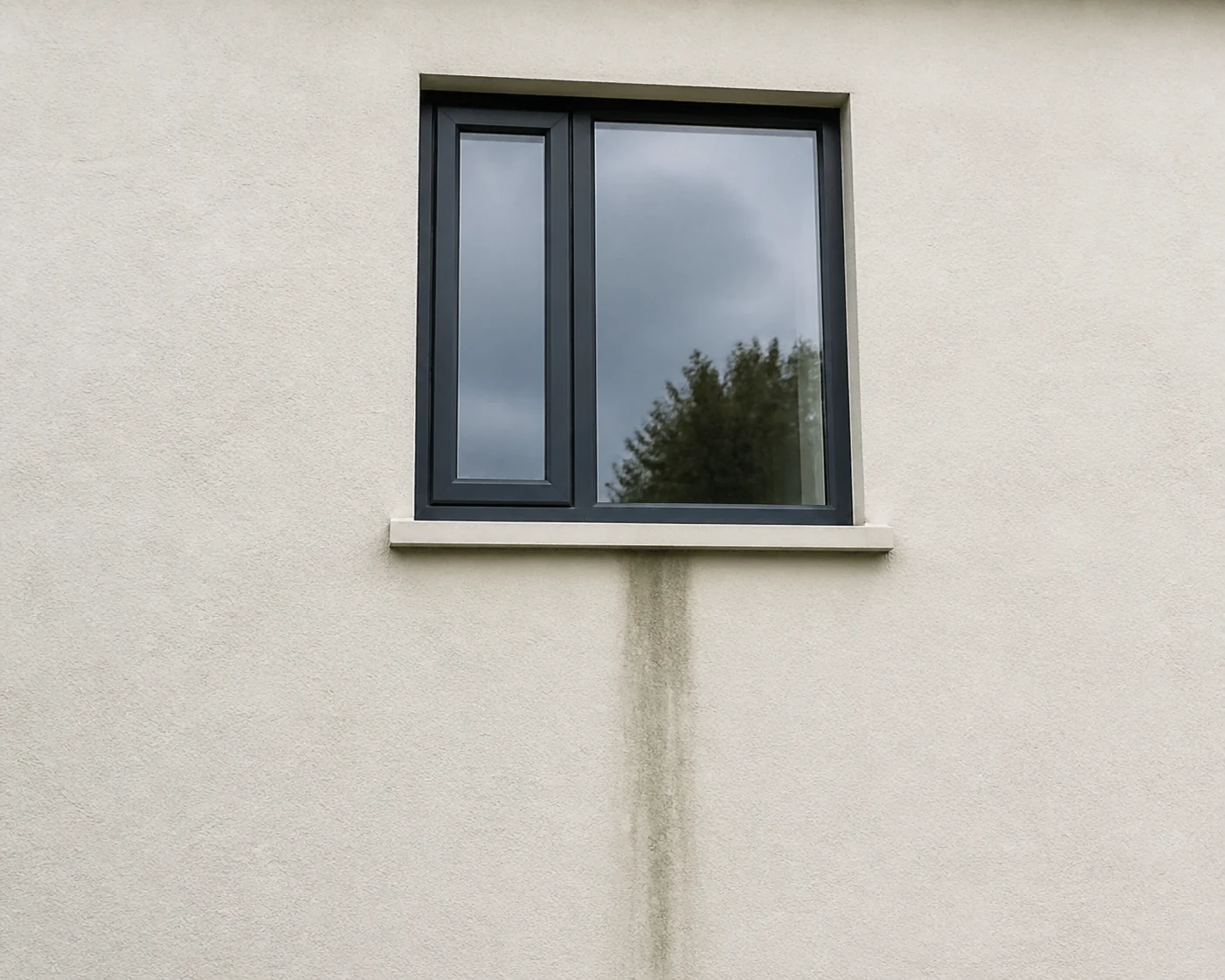
Not every mark on render has the same cause. Green growth, black staining, traffic film, weathering, mineral deposits and general grime all behave differently. Treating them all with the same wash can lead to disappointing results because the cleaning method does not match the problem.
Organic staining often needs a process that treats growth at its source. Dirt and atmospheric contamination may need careful cleaning to lift residue from the surface. Staining from gutters, overflows or repeated water runs may return until the moisture path is addressed. If the wall is being affected by a nearby surface, such as a driveway, patio or roofline, the surrounding area may also need attention.
This is where an experienced assessment is useful. The goal is to understand why the staining formed, not just to make it disappear on the day. Where exterior surfaces are affecting one another, services such as gutter cleaning or driveway cleaning may also be relevant, but only when they genuinely relate to the cause of the marks.
Why stains can return faster after a basic wash
A basic wash can sometimes create the impression that the problem has been solved, because the wall looks fresher immediately afterwards. The issue is that render can dry unevenly, hold microscopic residue and remain vulnerable to the same conditions as before.
If organic growth has not been treated properly, it can become visible again as it recovers. If moisture continues to run down the same section of wall, staining may return in the same pattern. If nearby trees, overflowing gutters or sheltered aspects are involved, those conditions will keep feeding the issue.
That does not mean cleaning has failed. It means the method needs to match the material and the cause. A general wash is useful for many exterior surfaces, but render often benefits from a more targeted process. This is especially true when a property owner has searched for render cleaning near me after seeing the same marks come back more than once.
What specialist render cleaning does differently
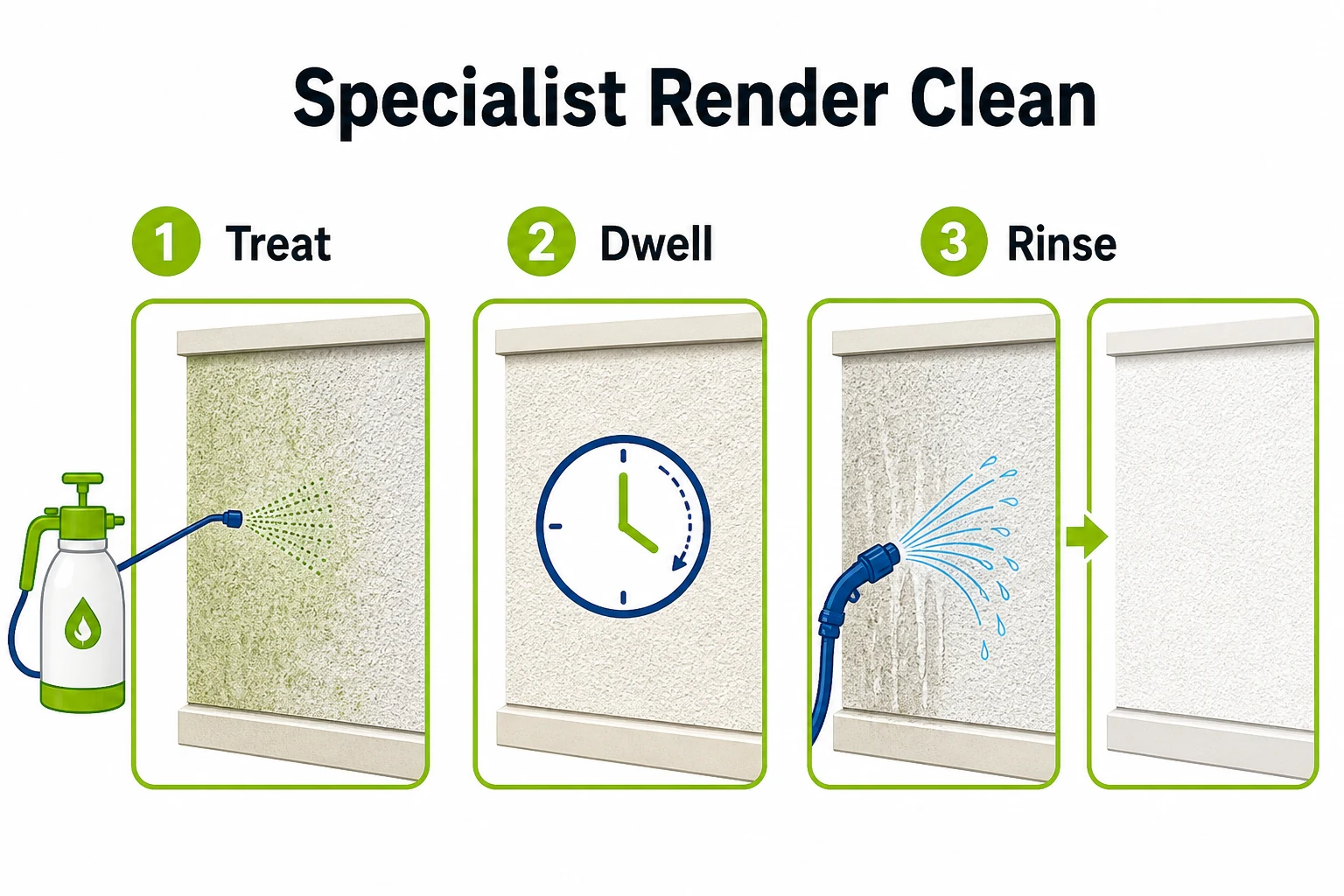
Specialist render cleaning starts with the surface. The wall is assessed for staining type, render condition and any factors that may affect the clean. The method can then be chosen to suit the material, rather than relying on one approach for every surface.
Where organic growth is present, a suitable soft wash style treatment may be used to help deal with the staining at source. The surface can then be rinsed carefully, with attention paid to edges, joins and areas where water may collect. The intention is to improve the appearance of the render while reducing the chance of the same marks returning quickly.
Good render cleaning is also measured and practical. It does not need dramatic force to be effective. It needs the right process, the right products and an understanding of how render behaves outdoors. For homeowners, landlords and commercial property owners, that makes specialist cleaning a sensible option when ordinary exterior washing keeps producing short lived results.
- Render stains often return because ordinary washing removes visible dirt but not the underlying cause.
- Organic growth, moisture and surface texture all play a part in repeat staining.
- More pressure is not always better for rendered walls and can be unsuitable for some finishes.
- A specialist render cleaning company can match the method to the staining and the condition of the wall.
- Related issues such as water runs, gutters or nearby surfaces may need attention to reduce repeat marks.
Frequently asked questions
Why do green and black marks come back after washing render?
They often return because the wash has removed the visible staining without fully treating the organic growth or moisture conditions behind it. Render can hold contamination in its texture, so a specialist process is usually more effective.
Can I use a pressure washer on rendered walls?
It depends on the render, its condition and the level of pressure used. Some rendered surfaces can be damaged by unsuitable pressure, so it is better to have the wall assessed before using forceful cleaning.
Is soft washing suitable for render?
Soft washing can be suitable for many rendered walls, especially where algae or similar organic staining is present. The right method depends on the surface, the stain and any surrounding materials.
How can I stop render stains returning quickly?
Use a cleaning method that treats the cause, not just the visible mark. It also helps to address moisture sources such as blocked gutters, repeated water runs and nearby surfaces that may be contributing dirt or organic matter.
Need help with recurring render stains?
If ordinary washing has not kept your walls looking clean, Leicester Proclean can assess the surface and recommend a suitable render cleaning approach.